

What Windows Permission Should Be Used Cautiously And Only For Exceptions?
Solusi
For the settings before using the Scan to File Server function (SMB) (related data), setting the IP address (related data), setting up a shared folder, and setting the motorcar for the Scan to File Server function are required.
This section describes how to setup a shared folder after the IP accost is prepare.
In that location are two setting options for the shared folder.
- Shared Binder without Access Control
- Shared Folder with Access Control
Notation
If "Access permissions" are granted to users who are registered for computers, they are authorized to operate folders and files.
This section describes the process for granting Full Control permission to the "Anybody" account so that any user tin can access the shared binder.
There are two types of access permissions:
- Network-level admission permission
This is to control users who access to the shared folder over the network.
- Local-level access permission
This is to control users who access folders by logging on to their computers.
The local-level admission permission tin exist set up only when the drive in which folders are located is formatted in NTFS.
Shared Folder without Access Control
This is useful when you want to share files with other users over a network without any restrictions.
Users can access these folders from any reckoner on the network without having to enter a user name and password.
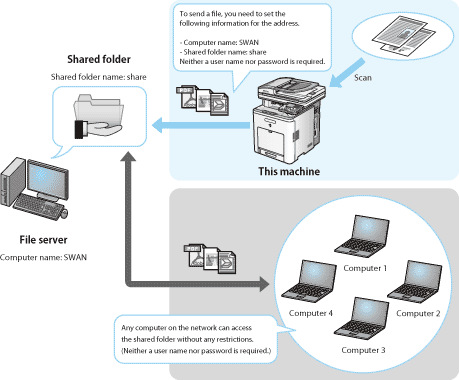
Follow the procedure below to prepare the shared folder without access command.
If you are using Windows XP Professional or Windows XP Home Edition, use simple file sharing to gear up the shared folders without admission control.
Note
If you are using Windows XP Professional person and simple file sharing is disabled, follow the procedures beneath to enable it.
- On the [Start] menu, select [Control Panel], and then select [Folder Options] to open the [Folder Options] dialog box.
- Select the [View] tab.
- Under [Advanced settings], select the [Use simple file sharing (Recommended)] check box.
- Click [OK] to close the [Folder Options] dialog box.
1. Create a new shared folder in any drive.
It is recommended to create the folder in a place where users can find it hands, such as the starting time level in C drive.
Ex.: C:\share
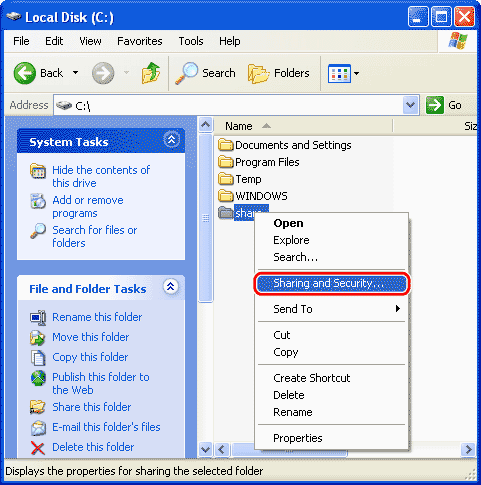
2. Right-click the created binder.
3. Select [Sharing and Security...] to open up the [<Folder name> Properties] dialog box.
4. Click [If you understand the security risks just want to share files without running the magician, click here.].
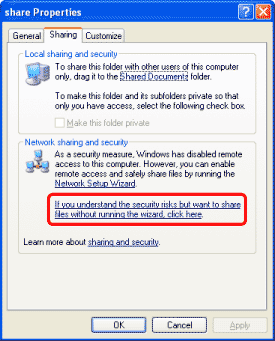
NOTE
This message is simply displayed the get-go time you open up the dialog box. If y'all are opening the dialog box for the second or subsequent time, proceed to Step 6.
five. In the [Enable File Sharing] dialog box, select the [Just enable file sharing] check box, and so click [OK].
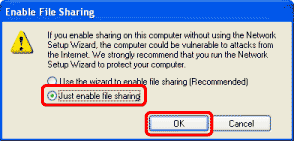
6. Select the [Share this folder on the network] and [Allow network users to change my files] bank check boxes.
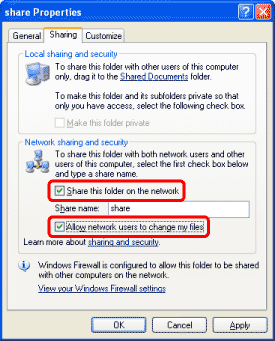
vii. Click [OK] to close the [<Binder proper name> Backdrop] dialog box.
Shared Folder with Access Control
This is useful when you lot want to limit access to sure users.
To admission a shared binder of this type, users have account information (user names and passwords) for the shared binder. If they practise not know their business relationship data, they cannot access that shard folder.
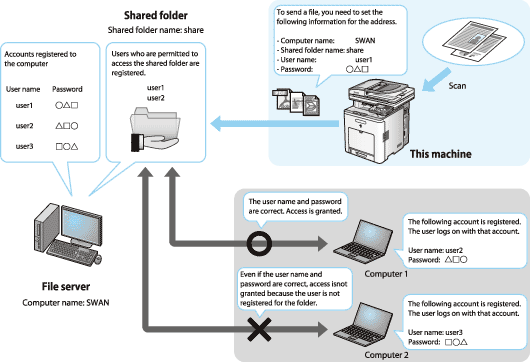
Follow the procedure below to access a shared binder with access control.
 Creating a User Account for Accessing a Shared Folder
You need to create user accounts for users who access the shared folder in advance. This department describes the procedure for creating a new account on your computer.
Notation
Fifty-fifty if yous do not create a new account past following the procedures below, you tin add a pre-registered account for users who are permitted to access the shared folder. In such case, you need to create a password if ane has non been ready for the preregistered business relationship. Once the password is created, the user is prompted to blazon the password when logging on to a computer.
1. On the [starting time] menu, select [Control Panel] to open [Command Console].
2. Click [User Accounts].
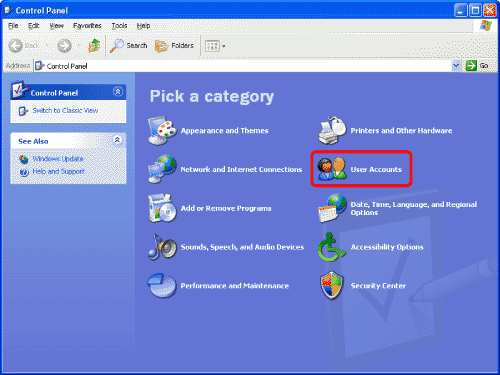
3. In the [User Accounts] dialog box, click [Create a new account].
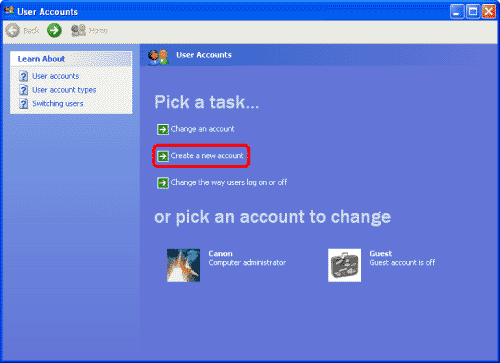
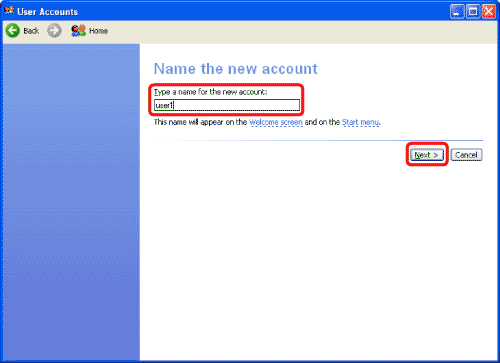
4. Blazon a user proper noun in [Type a name for the new account], and so click [Next>].
NOTE
The user name must exist up to 20 alphanumeric characters long.
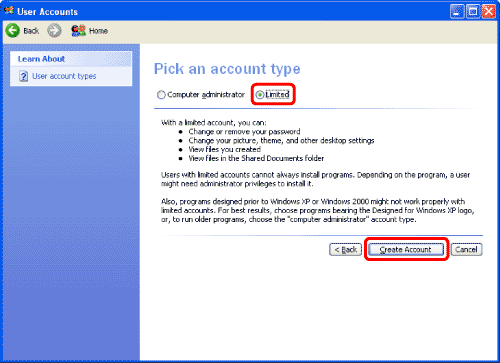
5. Select [Limited], so click [Create Account].
6. Click the created user, and then click [Create a password].

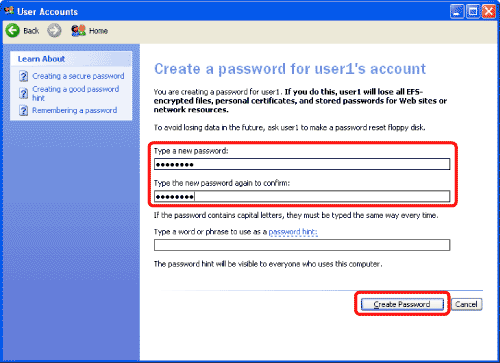
7. Type a password in [Type a new countersign] and [Type the new countersign again to confirm], and so click [Create Password].
Notation
The password must be up to 14 alphanumeric characters long.
8. Close the [User Accounts] dialog box.
Setting a Shared Folder and Access Permissions
Once you create the business relationship on your computer, create a shared folder. Add the created account to the shared folder as a user who is permitted to access that folder. Set access permissions so that the user tin that folder as well.
- Create a new shared binder in whatsoever drive.
It is recommended to create the binder in a place where users tin can observe information technology hands, such as the outset level in C drive.
Ex.: C:\share
- Right-click the created binder.
- Select [Sharing and Security...] to open the [<Folder proper name> Properties] dialog box.
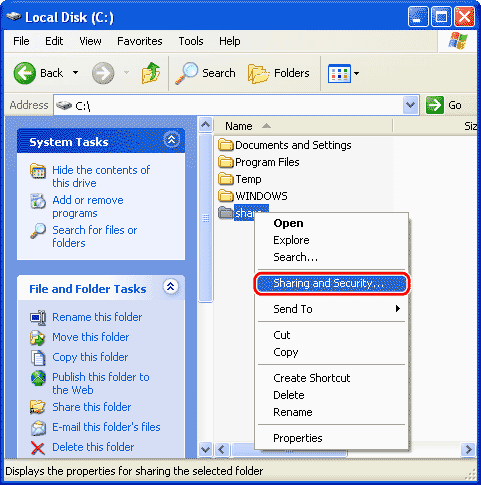
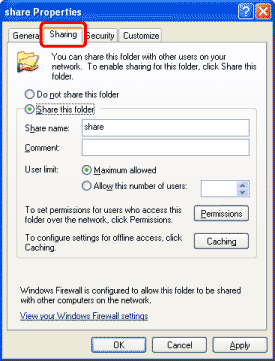
- Select [Share this binder].
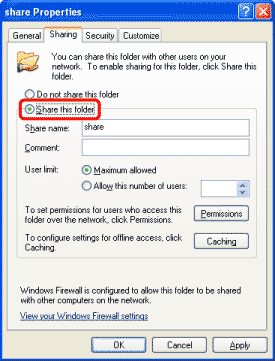
2. Set the network-level access permission.
- In the [Sharing] sheet, click the [Permissions] push button to open the [Permissions for <Binder Name>].
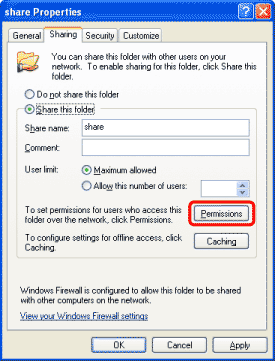
- Click [Add...] to open the [Select Users or Groups] dialog box.
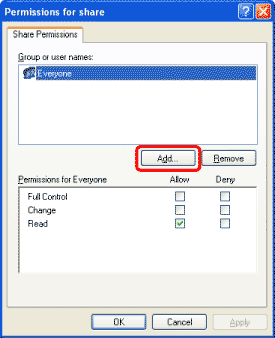
- Type [Reckoner Name]\[User Name] in [Enter the object names to select].
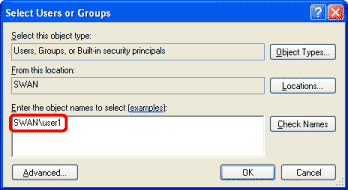
- Click [Bank check Names]. Brand certain that the right object name is typed.
Notation
The [Name Not Constitute] dialog box appears if y'all enter an incorrect object name. If this happens, click [Cancel] to shut the dialog box and check the computer proper name and user proper noun.
- Click [OK] to close the [Select Users or Groups] dialog box.
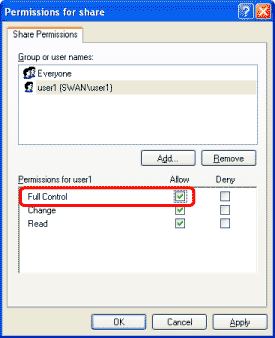
- In the [Permissions for <Folder name>], under [Group or user names], select the user whom y'all want to grant permission. Select the [Full Control] box nether [Permit].
NOTE
Select the [Full Command] box so that you can shop data scanned with this auto on a computer (the file server).
- Click [OK] to shut the [Permissions for <Folder Name>] dialog box.
- If the [Security] tab is displayed in the [<Folder name> Backdrop], proceed to Pace 3 to set the local-level access permission. If not, go on to Step 4.
Annotation
The [Security] tab is non displayed when:
- The drive to which the shared folder is set up is formatted in FAT16 or FAT32.
- Elementary file sharing is enabled.
3. Prepare the local-level access permission.
If the bulldoze to which the shared folder is set is formatted in NTFS, you demand to set the local-level as well every bit the network-level access permissions.
- In the [<Folder name> Backdrop], click the [Security] tab.
- Click [Add together...] to open the [Select Users or Groups] dialog box.
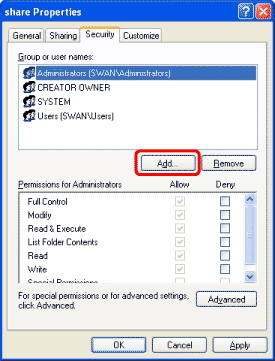
- Type [Computer Name]\[User Name] in [Enter the object names to select].
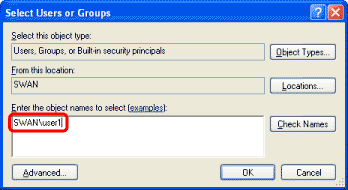
- Click [Cheque Names]. Make sure that the right object name is typed.
NOTE
The [Name Non Establish] dialog box appears if you enter an incorrect object name. If this happens, click [Cancel] to shut the dialog box and cheque the calculator name and user proper name.
- Click [OK] to close the [Select Users or Groups] dialog box.
- In the [Security], under [Group or user names], select the user whom you want to grant permission. Select the [Full Control] box under [Allow].
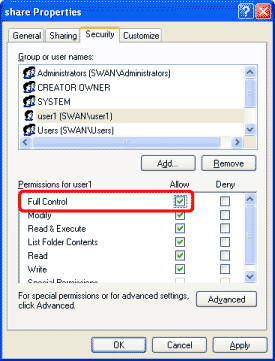
NOTE
Select the [Full Control] box and so that you tin shop information scanned with this machine on a computer (the file server).
four. Click [OK] to close the [<Folder name> Backdrop] dialog box.

What Windows Permission Should Be Used Cautiously And Only For Exceptions?,
Source: https://id.canon/id/support/8200290900
Posted by: rollinsonews1937.blogspot.com
0 Response to "What Windows Permission Should Be Used Cautiously And Only For Exceptions?"
Post a Comment